

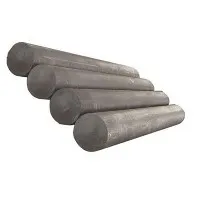
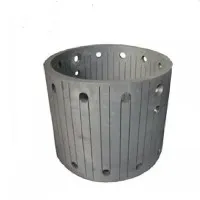


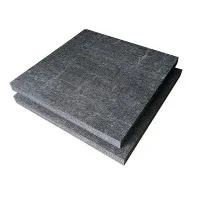


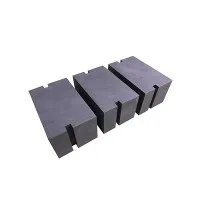


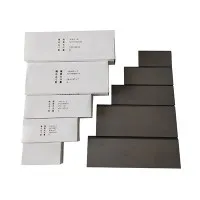
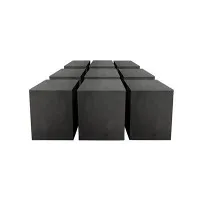


Graphite Rod
Why Choose Zibo Jinpeng Composite Materials Technology Co., Ltd.?

Zibo Jinpeng Composite Materials Technology Co., Ltd. is located in Wangcun Town, Zibo City, Shandong Province, which is a famous graphite carbon industry base in China. Our company mainly produces and processes graphite carbon materials. It has a complete production process and marketing system. It has been engaged in the production and processing of graphite products for more than 20 years. It has built its own production and processing process system and has three national invention patents. It has established extensive technical cooperation relationships with well-known domestic university laboratories such as Shandong University of Technology and Northwestern Polytechnical University and has produced graphite parts for many well-known companies. It has its own related industrial R&D system and testing and testing equipment.
Professional Technical Team
We have more than 20 years of experience and dozens of senior engineers in the graphite R&D, production and manufacturing industry. Whether it is the research and development of graphite raw materials, the precise processing of graphite parts, and the graphitization and purification of related products, our high-level technical team can customize professional solutions for you.
Wide Range of Applications
Our product application range includes the glass industry, high temperature furnace industry, refractory industry, plastics industry, semiconductor electronics industry, photovoltaic industry, pharmaceutical and chemical industry, aerospace industry, metallurgical industry, automotive industry, renewable energy industry, textile machinery manufacturing, glass machinery manufacturing.
Professional Service
Fully communicate with customers before sales, provide professional product suggestions and technical support according to customer needs, and ensure the high quality of products in manufacturing, packaging, logistics and other aspects. During the sale period, Zibo Jinpeng Graphite Factory not only provides on-time delivery services but also provides comprehensive after-sales technical support such as lifetime warranty, technical consultation and problem diagnosis to ensure customer satisfaction and trust. In terms of after-sales service, we attach great importance to customer feedback, promptly solve problems and concerns raised by customers, and continuously improve service quality and efficiency based on customer experience and suggestions.
Wide Product Range
Our main products are Graphite heating elements, Graphite felt & carbon felt & rigid felt, Graphite crucible, etc. At present, North America, Eastern Europe and Southeast Asia are Zibo Jinpeng's main international cooperation destination markets. Thanks to stable product quality and excellent material properties, the graphite products produced by Zibo Jinpeng have a high market share in the fields of smelting, chemical industry, and high-temperature industrial furnace accessories.


What is Graphite Rod?
Graphite rods are thin, straight rods made of plastic, metal, ceramic, or organic substance. They are relatively simple to construct and can serve a variety of functions depending on their composition and size.
As a type of rod, graphite rods are produced from machined graphite or graphite compounds. They are well-known for their excellent thermal shock resistance, heat resistance, high corrosion resistance, non-reactivity, and ability to age well (because graphite is a non-fatiguing material).
Features of Graphite Rod
High Temperature Tolerance:
Graphite rods can withstand very high temperatures without melting or breaking down.
01
Low Coefficient of Thermal Expansion:
Graphite rods have a very low coefficient of thermal expansion, meaning they do not expand or contract significantly with temperature changes.
02
Excellent Electrical Conductivity:
Graphite rods are highly conductive, making them ideal for use in electrical and electronic applications.
03
High Strength and Stiffness:
Graphite rods have high strength and stiffness, making them very strong and resistant to deformation under pressure.
04
Chemical Inertness:
Graphite rods are chemically inert, meaning they do not react with most chemicals, making them ideal for use in corrosive environments.
05
Lightweight:
Graphite rods are lightweight, making them easy to handle and to transport.
06
Low Friction:
Graphite rods have low coefficients of friction, making them ideal for use in high-speed applications.
07
Good Thermal Conductivity:
Graphite rods have good thermal conductivity, meaning they can transfer heat quickly and efficiently.
08
Resistance to Abrasion:
Graphite rods are highly resistant to abrasion, making them ideal for use in applications where wear and tear are a concern.
09
Non-magnetic:
Graphite rods are non-magnetic, making them ideal for use in magnetic applications where interference must be avoided.
10
Types of Graphite Rod

Higher Density Graphite Rods
High density graphite is an exceptionally special material with high strength, high density, and a fine microstructure. It can be used for making rods because of its ability to handle exceedingly high temperatures while maintaining its shape and strength. Furthermore, these rods are low-cost and simple to machine in any form.
In the present day tech, graphite samples were produced from coal tar pitch based semi coke powders without the use of any supplementary binder. Isostatic graphite rods display greater features when compared to man-made graphite made from the old-style filler and binder procedure. This is then carbonized, pore filled, and graphitized.
Superfine Molded Graphite Rod
Its characteristics are super fine grain size, high density, unreactive, superior strength, and molded graphite rod. It’s suggested for high temperature metal, glass, and electrochemical applications including Diameter tolerances: +.010" / -.005". Superfine graphite is rated at a temperature of up to 2760 degrees Celsius. Particle size is 0.001in, Density is 1.8gr/cm, Compressive Strength is 13K psi, and Resistivity is 0.00050 ohm/inch.


Medium Grained Graphite Rods
The construction of these rods are ideal for roughing and finishing operations in various industrial applications. These rods are produced by use of an alternate manufacturing procedure which reduces cost over the isostatic molding procedure.
The label of medium grain graphite typically refers to materials with individual particles that range in size from 0.0508mm up to 1.575mm, which have been compression molded or extruded into their raw material form. 12 to 20% of a rod’s volume is made up of pores between individual particles which are visible to the naked eye. When talking of uses, medium grain graphite rods represent a perfectly appropriate substitute to fine grain graphite rods。
Coarse Grained Graphite Rods
There are several circumstances where coarse grain graphite rods are desired and satisfactory for an application. Usually when discussing a coarse grain graphite rod, it’s an extruded graphite. The distinct particle size of this graphite material will vary from 1.016mm up to 6.096mm and have a large quantity of pores in the material.
This coarse grain material is a great material for the manufacture of graphite rods. Because of its big particle size and open pores the rods handle thermal shock extremely well and can handle changes in temperature as molten metals touch its surface. While these rods also have about 12 to 20% of its volume made up of pores between individual particles, these pores are quite visible to the naked eye because of the particles that make up the rods. These rods are mostly used as graphite electrodes for ladle furnaces and electric arcs in the steel industry.


Pyrolytic Carbon Coated Graphite Rods
A pyrolytic carbon layer on graphite reduces gas permeability, improves oxidation stability, and protects against particle release. It is created by means of a Chemical Vapor Deposition (CVD) procedure. Pyrolytic carbon coatings, like graphite, have exceptional thermal stability and chemical inertness. Furthermore, pyrolytic carbon can be utilized to penetrate and densify graphite, considerably reducing internal porosity.
Advantages of Graphite Rod

Good Thermal Conductivity
Graphite rods conduct electricity and are inert. They have good thermal conductivity because graphite is a superior thermal conductor and has a high thermal shock resistance.
High Compressive Strength
Compressive strength varies from 11K to 38K lbs/in2 for fine grain rods. In designing mechanical parts, it is prudent to take advantage of materials with high compressive strength. Machinability to extremely tight tolerances. Corrosion resistant, for all practical purposes, they are resistant to most acids, alkalis, solvents, and similar substances. Seal face flatness as a result of high size of elasticity and stability to stay flat during operation at the rubbing faces.

Non-Galling and Built-In Lubrication
Because the molecular structure of graphite generates an extremely thin covering on moving parts, products will not seize or gall in the most severe applications. Also porosity. Graphite is porous, but impregnates are utilized to cover these pores, which can range from high to completely impervious depending on the application. Because some graphite has small pores, not all kinds of graphite require impregnation. It is critical to choose the right substance for the impregnation process.
Durable and Strong
Furthermore, they are very durable and strong. As a matter of fact, the structural quality of machining a graphite rod is such that, not only can it maintain its form while under very high temperature, but it then becomes stronger and more durable as temperature rises. Graphite rods may be cut to fit the volume, diameter, length, and shape requirements for all types of applications.

Application of Graphite Rod
Graphite rods are often utilized for fiber optics and semiconductor applications, both of which need precision and sensitivity. More popular uses of graphite rods are fishing rods and small fishing rods (since graphite is sensitive, durable, and lightweight).
Industrial applications include heat treating; they are used to support beams or hearth rails to enable thermal expansion because graphite can withstand extreme temperatures. Also as hot and melting metal stirring rods, graphite electrode cylinder rods. In electrolysis, graphite rods are used as well as the numerous delocalized electrons allow electricity to move through graphite swiftly.
Graphite rods can be used to extend a blown-in hole in a tube, as a flaring device, or to make an indentation in a glass sidewall. Graphite rods are applied as moderators in nuclear reactors to control the reaction rate. Graphite enables fission chain reaction by slowing neutrons in a graphite reactor. A few rods are inserted and absorb more neutrons that become available then the chain reaction accelerates. The level of power in the reactor starts to rise.
Machined graphite is commonly made of a composite or mixture of graphite and copper. Pure graphite with the additional copper yields its sought after properties of elevated strength and secured conductivity. As was alluded to, graphite rods are extremely resistant to heat. To define and quantify “extreme,” it is to be noted that graphite rods can keep their form even when exposed to “extreme” temperatures such as 5000 degrees.
Customers and manufacturers alike must examine a few key variables when purchasing graphite rods to ensure that graphite is the correct material for the task. Considerations include the expected time of exposure to weather elements, the expected sorts of weather elements, the anticipated length of exposure to excessive heat, the intended usage, predicted tension or stress levels, and the required rod dimensions.

How to Maintain Graphite Rod
1. In the process of using graphite rod products, the graphite rod products are transferred once a week to extend the life of graphite rod products;
2. The use of appropriate amount of accelerants and additives will reduce the life of graphite rod products;
3. Graphite rod products should be kept at a proper distance from the furnace wall, and graphite rod products should be placed in the middle of the furnace;
4. When removing the slag and coke on the surface and inner walls of graphite rod products, it should be tapped to prevent damage to graphite rod products;
5. Graphite rod products should be kept from being wet, and it is necessary to put them in a monotonous place or on a wooden frame when storing.
Manufacturing Methods of Graphite Rod
A fabrication method is determined based on the specific application’s needs for which a graphite rod is to be used. Similarly, the type of graphite used in a graphite rod forming process is determined by the application’s needs. Most graphite rods, for instance, are produced from finer grain graphite, which provides a nicer surface finish to the rods. When a smooth finish or surface is not required, coarse grain and or high density graphite stock might be utilized instead.
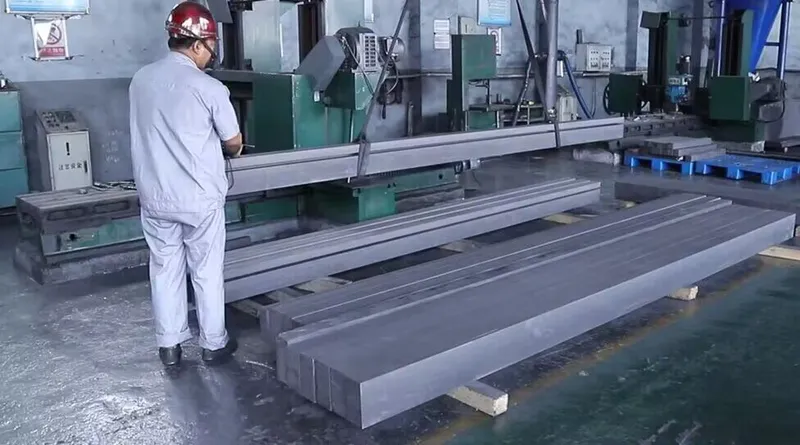
Our Factory
We have a complete factory production, quality supervision and delivery.

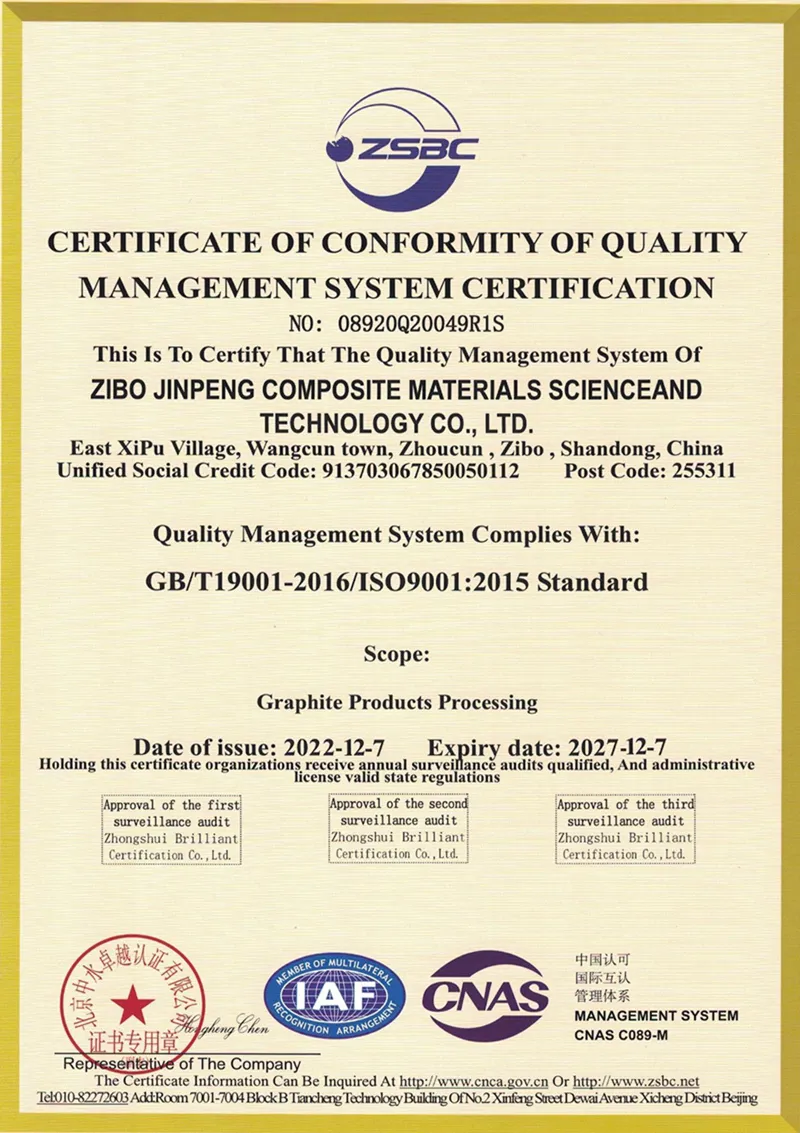
Our Certificate
At present, we have obtained the following certificates.
Ultimate FAQ Guide to Graphite Rod
Q: 1. What is a Graphite Rod and what is it used for?
Q: 2. What are the properties of Graphite Rods?
Q: 3. What types of Graphite Rods are there?
Q: 4. What are the available sizes of Graphite Rods?
Q: 5. What industries use Graphite Rods?
Q: 6. How are Graphite Rods machined?
Q: 7. What is the temperature range of Graphite Rods?
Q: 8. What are the main advantages of Graphite Rods?
Q: 9. Are Graphite Rods easy to maintain?
Q: 10. What are the applications of Graphite Rods?
Q: 11. How long do Graphite Rods last?
Q: 12. Are there any safety concerns when using Graphite Rods?
Q: 13. How are Graphite Rods stored?
Q: 14. What are the main grades of Graphite Rods?
Q: 15. Which grade of Graphite Rods is the most commonly used?
Q: 16. Are Graphite Rods recyclable?
Q: 17. What is the cost of Graphite Rods?
Q: 18. Can Graphite Rods be custom-made?
Q: 19. What is the manufacturing process for Graphite Rods?
Q: 20. What is the typical lead time for Graphite Rods?
Q: 21. What is the maximum load capacity of Graphite Rods?
Q: 22. Can Graphite Rods be used in vacuums?
Q: 23. What is the thermal conductivity of Graphite Rods?
Q: 24. What is the electrical conductivity of Graphite Rods?
Q: 25. Can Graphite Rods be used in cryogenic applications?