







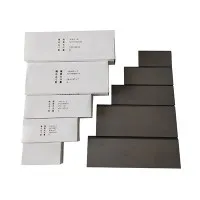
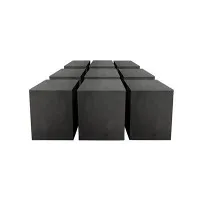


Graphite Block
Why Choose Zibo Jinpeng Composite Materials Technology Co., Ltd.?

Zibo Jinpeng Composite Materials Technology Co., Ltd. is located in Wangcun Town, Zibo City, Shandong Province, which is a famous graphite carbon industry base in China. Our company mainly produces and processes graphite carbon materials. It has a complete production process and marketing system. It has been engaged in the production and processing of graphite products for more than 20 years. It has built its own production and processing process system and has three national invention patents. It has established extensive technical cooperation relationships with well-known domestic university laboratories such as Shandong University of Technology and Northwestern Polytechnical University and has produced graphite parts for many well-known companies. It has its own related industrial R&D system and testing and testing equipment.
Professional Technical Team
We have more than 20 years of experience and dozens of senior engineers in the graphite R&D, production and manufacturing industry. Whether it is the research and development of graphite raw materials, the precise processing of graphite parts, and the graphitization and purification of related products, our high-level technical team can customize professional solutions for you.
Wide Range of Applications
Our product application range includes the glass industry, high temperature furnace industry, refractory industry, plastics industry, semiconductor electronics industry, photovoltaic industry, pharmaceutical and chemical industry, aerospace industry, metallurgical industry, automotive industry, renewable energy industry, textile machinery manufacturing, glass machinery manufacturing.
Professional Service
Fully communicate with customers before sales, provide professional product suggestions and technical support according to customer needs, and ensure the high quality of products in manufacturing, packaging, logistics and other aspects. During the sale period, Zibo Jinpeng Graphite Factory not only provides on-time delivery services but also provides comprehensive after-sales technical support such as lifetime warranty, technical consultation and problem diagnosis to ensure customer satisfaction and trust. In terms of after-sales service, we attach great importance to customer feedback, promptly solve problems and concerns raised by customers, and continuously improve service quality and efficiency based on customer experience and suggestions.
Wide Product Range
Our main products are Graphite heating elements, Graphite felt & carbon felt & rigid felt, Graphite crucible, etc. At present, North America, Eastern Europe and Southeast Asia are Zibo Jinpeng's main international cooperation destination markets. Thanks to stable product quality and excellent material properties, the graphite products produced by Zibo Jinpeng have a high market share in the fields of smelting, chemical industry, and high-temperature industrial furnace accessories.


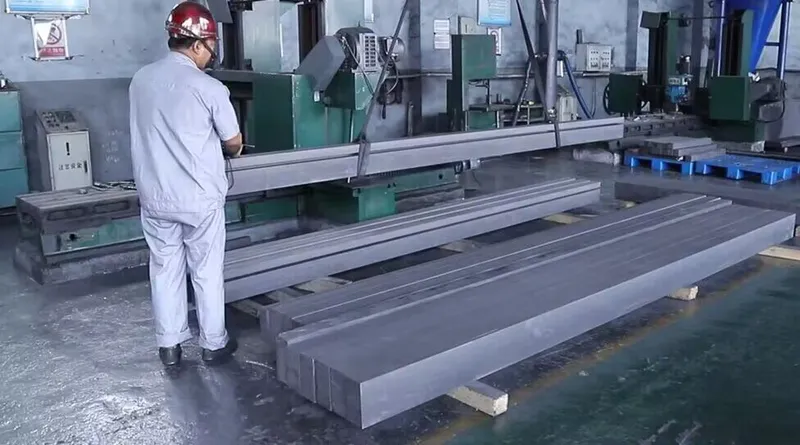
What is Graphite Block?
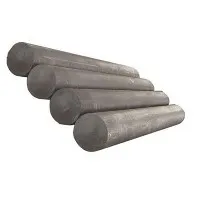
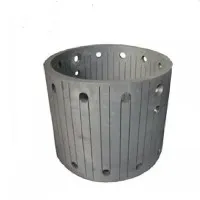
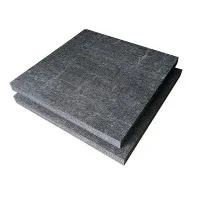
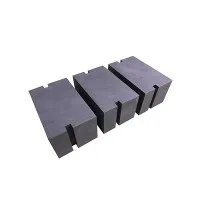
A graphite block is a solid shape of graphite, graphitized graphite electrode, or graphite powder isostatic pressing made from artificial graphite, and then machined into various graphite molds.
Features of Graphite Block
High Thermal Conductivity:
Graphite blocks have a very high thermal conductivity, making them ideal for use in applications requiring high temperatures.
Chemical Resistance:
Graphite blocks are highly resistant to most chemicals and are therefore used in environments where chemical resistance is a must.
Low Coefficient of Thermal Expansion:
Graphite blocks have a very low coefficient of thermal expansion, which makes them highly stable over a wide temperature range.
High Electrical Conductivity:
Graphite blocks are highly conductive of electricity, making them ideal for use in electrical applications.
High Strength and Durability:
Graphite blocks are very strong and durable, with excellent resistance to mechanical stresses and high temperatures.
Good machinability:
Graphite blocks can be easily machined to the desired shape, size, and tolerance.
Self-lubricating:
Graphite blocks have a natural self-lubricating property, which makes them ideal for use in applications where friction and wear are a concern.
Lightweight:
Graphite blocks are relatively lightweight, making them easy to handle, transport, and install.
Easy to install:
Graphite blocks are easy to install and can be used in a variety of applications, including furnace linings, heat exchangers, and electrodes.
Types of Graphite Block
High Purity Graphite Block
High purity graphite block, also known as molded graphite, means that the carbon content of graphite is>99.99%, which has excellent characteristics such as good conductivity, thermal conductivity, oxidation resistance, low resistance coefficient, high purity, self-lubricating, thermal shock resistance, isotropy, and easy processing. It is widely used in aerospace, solar photovoltaic and semiconductor, continuous casting, cemented carbide and electronic mold sintering, EDM, glass, machinery, energy, and other industries.
Graphite Block For Vacuum Furnace
The anode of electrolytic graphite electrolysis often oxidizes the anions in the solution into simple substances or other high valence states.
Graphite Block For Vacuum Furnace
The application of Graphite Block For Vacuum Furnace in vacuum furnaces greatly simplifies the design and manufacture of vacuum furnaces, reduces the consumption of metals such as tungsten, molybdenum, tantalum, and stainless steel, reduces the cost, improves some properties of vacuum furnace and expands the application range of vacuum furnace.
Advantages of Graphite Block

*Graphite blocks are used to make capable, reliable products.
*Graphite blocks produce electrodes that exhibit high electrical conductivity properties as well as good refractory properties (for example, high thermal shock resistance and low thermal expansion).
*Graphite blocks exhibit high mechanical strength, high thermal conductivity, and high density.
*Graphite blocks are highly machinable.
*These materials are chemically stable and lightweight.
*Resistance to Hot Metals
In aluminum smelting systems, quality blocks are used for sidewalls and linings because they have a high solubility and are resistant to the presence of hot metal. Because the blocks have limited porosity and a lengthy life cycle, metal cannot permeate them.
*Thermal Resistance
One of the main causes of block failures and problems with the lining and sidewalls of furnaces is thermal resistance, or heat. The life cycle is prolonged by exclusively employing premium carbon blocks, and the mix of fills, sealants, and manufacturing procedures for the blocks ensures continued usage even in the most demanding applications.

Application of Graphite Block

Graphite blocks are utilized in graphitization furnaces, silicon carbide furnaces, and other metallurgical furnaces. They are used as a conductive material for furnace linings in resistance furnaces. They are also used for impermeable graphite heat exchangers. Graphite blocks are most commonly used in metallurgy, electronics, steel, and chemical industries. Products made from graphite blocks are of excellent quality and they have stable performance.
Graphite blocks are utilized in metal processing as electrodes. These electrodes exhibit high electrical conductivity properties as well as good refractory properties like high thermal shock resistance and low thermal expansion. Other applications of graphite blocks include them being used in the applications of hot-pressing molds as well as being used as nozzles for continuous casting of metals. Graphite blocks are used for creating graphite plates that are used as collecting shoes for electric trains, even though their usage will decrease due to high-speed driving.
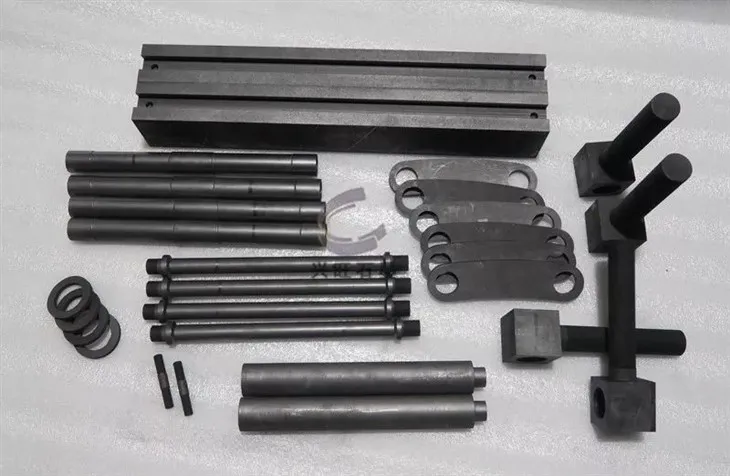

Polycrystalline graphite blocks are one of the best materials utilized in nuclear-fission applications due to their high moderating efficiency as well as low absorption cross-section for neutrons. Graphite blocks are utilized in high-temperature gas-cooled reactors. In these reactors, graphite materials are utilized as permanent reflectors on the exterior part. In the interior, they are used as replaceable reflectors. At the center, they are used as fuel-element blocks, and as a coating of small fuel particles.
How to Select Graphite Block
1、Under high speed or high pressure, it is necessary to use effective methods to dissipate the friction heat, which should be cleaned when it is used in the medium with crystal precipitation.
2. The differences of thermal expansion coefficient should be paid attention to the carbon graphite ring or bearing which are inlaid with metal parts. Assembly, the choice of excessive amount should be reasonable, not too large.
3. Before installation, two working surfaces of friction pair must be grinded. After installation, the friction pair runs firstly at low speed or starts to work in the working state repeatedly through running-in, which can be put into operation.
4. Carbon--- graphite is a kind of brittle materials. Generally speaking, its mechanical strength is lower than metals. Therefore, we should be fully aware of this during the designing of the structure and be careful in the process of machining and assembly operations, it is forbidden to beat with rigid thing to avoid cracking.
Manufacturing Methods of Graphite Block
There are many different types of processes used in the production of graphite blocks. The most commonly used methods are molding, extrusion, and isostatic pressing. The production process of graphite blocks follows many different stages. The first stage is crushing and grinding. The process begins with crushing and grinding. Next, the material is mixed and kneaded, followed by crushing and screening. The next stage includes pressing, roasting, and impregnation. In the final stages, the graphite undergoes graphitization, machining, and testing. At last, the final product is produced.
How to Use Graphite Block Safely
Sawing Synthetic Graphite Blocks Safely
The synthetic graphite blocks’ first stop beyond the storage warehouse is almost always the saw department. Here, large blocks or rounds of synthetic graphite are trimmed and partitioned based on each job's specifications. Since virtually all material used in the facility passes through one of our saws, we naturally make safety in our saw department a priority. By implementing various safety features, we enable our operators to cut material safely. Most of these safety features are built into the actual saws:
Dust Port: This feature channels dust away from the cutting platform and is connected to our dust collector. Dust ports enable dust free operations, better visibility, and good air quality.
Blade Adjustment Knob: This knob helps adjust the cutting blade's height and position. Allowing the machinist to set the blade at the proper height accommodates the safe handling of specific blocks, which come in many sizes.
Blade: There are various blade types, from diamond to carbide. Each choice of blade compound is determined for the specific material grade to be cut, and ensures that the material is cut cleanly and efficiently.
Wheel Guard: This component guards the saw's wheel inside the frame since the wheel is sharp and can easily cause accidents if left exposed.
Blade Guard: This component guards the spinning blade to prevent an accident or kickback during the job.
Blade Tensioner: The usefulness of this component is in safely ensuring that the blade isn’t too tight when working with softer material. If the blade is too tight, it can cause breakage or possibly slip off the wheels.
Passing Graphite Blocks Safely Through Lathe and Mill
From the saw department, the synthetic graphite material is generally transferred to either the lathe or mill department. Here as well, our machines have various safety features built into them.
For lathes, safety features for machining graphite blocks include the following:
Foot Brake: All lathes have a foot-enabled brake at the bottom of the machine that cuts off the spindle motor mechanically and electronically.
E-Stop Button: The Emergency Stop Button stops the motor electronically, allowing the motor to coast to a stop. This is used in situations where the foot brake is not needed to stop the lathe instantly.
Chuck Guard: All engine lathes feature a chuck guard that extends around the spindle nose. The chuck guard needs to be in the closed position to start the machine. If you’re running the machine and you lift the chuck guard, it functions like an E-Stop Button and shuts down the spindle.
Doors: All enclosed lathes have doors present that have to be closed in order to begin the operation.
Many of the same features can be found on the milling machines. E-Stop Buttons are present on all machines, as are guards, doors etc.
Our Factory
We have a complete factory production, quality supervision and delivery.

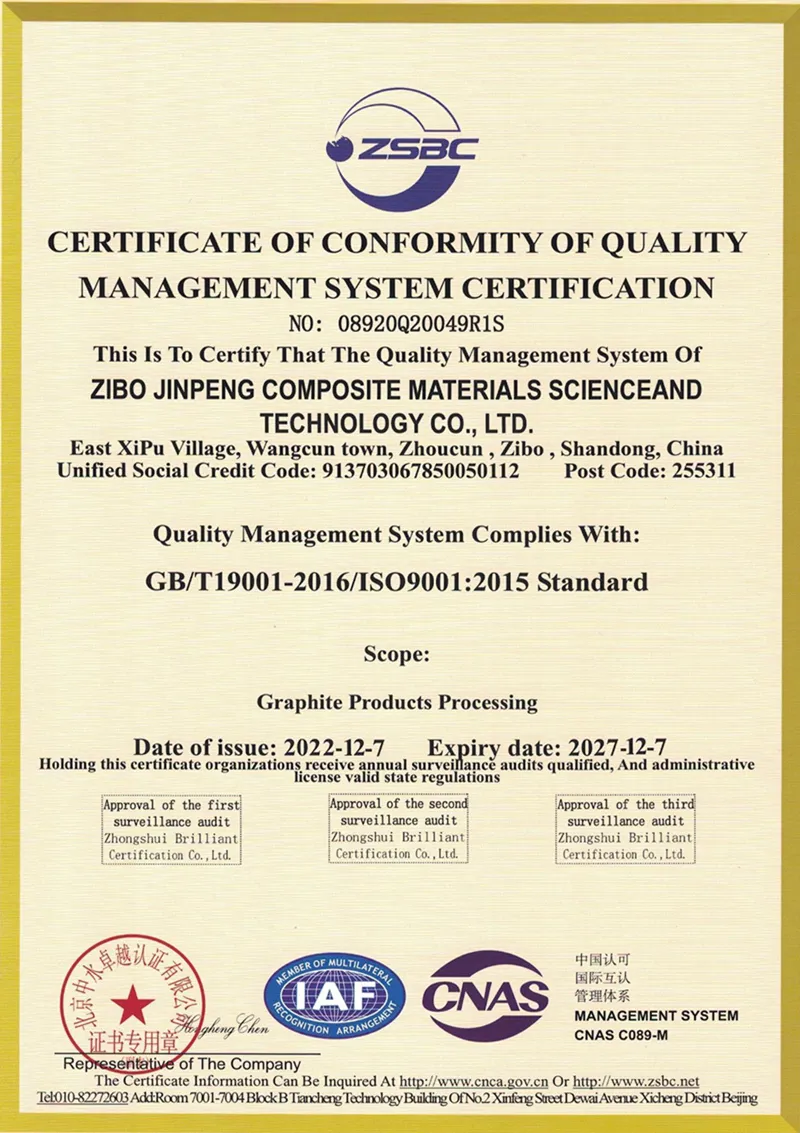
Our Certificate
At present, we have obtained the following certificates.
Ultimate FAQ Guide to Graphite Block
Q: 1. What is a graphite block?
Q: 2. What are graphite blocks made of?
Q: 3. How are graphite blocks made?
Q: 4. What are the different types of graphite blocks?
Q: 5. What are the applications of graphite blocks?
Q: 6. What are the benefits of using graphite blocks?
Q: 7. Can graphite blocks be customized?
Q: 8. How are graphite blocks formed?
Q: 9. How are graphite blocks machined?
Q: 10. What is extruded graphite?
Q: 11. What is isostatic graphite?
Q: 12. What is molded graphite?
Q: 13. Can graphite blocks withstand high temperatures?
Q: 14. What are some common features of graphite blocks?
Q: 15. What are some common sizes of graphite blocks?
Q: 16. What are some common shapes of graphite blocks?
Q: 17. What materials can be used to make graphite blocks?
Q: 18. How long do graphite blocks last?
Q: 19. Are graphite blocks recyclable?
Q: 20. What is the cost of graphite blocks?
Q: 21. How do graphite blocks compare to other materials?
Q: 22. Are there any disadvantages to using graphite blocks?
Q: 23. Can graphite blocks be repaired?
Q: 24. How do you clean graphite blocks?
Q: 25. Are there any safety precautions to take when using graphite blocks?