









Graphite Bipolar Plate
Why Choose Zibo Jinpeng Composite Materials Technology Co., Ltd.?

Zibo Jinpeng Composite Materials Technology Co., Ltd. is located in Wangcun Town, Zibo City, Shandong Province, which is a famous graphite carbon industry base in China. Our company mainly produces and processes graphite carbon materials. It has a complete production process and marketing system. It has been engaged in the production and processing of graphite products for more than 20 years. It has built its own production and processing process system and has three national invention patents. It has established extensive technical cooperation relationships with well-known domestic university laboratories such as Shandong University of Technology and Northwestern Polytechnical University and has produced graphite parts for many well-known companies. It has its own related industrial R&D system and testing and testing equipment.
Professional Technical Team
We have more than 20 years of experience and dozens of senior engineers in the graphite R&D, production and manufacturing industry. Whether it is the research and development of graphite raw materials, the precise processing of graphite parts, and the graphitization and purification of related products, our high-level technical team can customize professional solutions for you.
Wide Range of Applications
Our product application range includes the glass industry, high temperature furnace industry, refractory industry, plastics industry, semiconductor electronics industry, photovoltaic industry, pharmaceutical and chemical industry, aerospace industry, metallurgical industry, automotive industry, renewable energy industry, textile machinery manufacturing, glass machinery manufacturing.
Professional Service
Fully communicate with customers before sales, provide professional product suggestions and technical support according to customer needs, and ensure the high quality of products in manufacturing, packaging, logistics and other aspects. During the sale period, Zibo Jinpeng Graphite Factory not only provides on-time delivery services but also provides comprehensive after-sales technical support such as lifetime warranty, technical consultation and problem diagnosis to ensure customer satisfaction and trust. In terms of after-sales service, we attach great importance to customer feedback, promptly solve problems and concerns raised by customers, and continuously improve service quality and efficiency based on customer experience and suggestions.
Wide Product Range
Our main products are Graphite heating elements, Graphite felt & carbon felt & rigid felt, Graphite crucible, etc. At present, North America, Eastern Europe and Southeast Asia are Zibo Jinpeng's main international cooperation destination markets. Thanks to stable product quality and excellent material properties, the graphite products produced by Zibo Jinpeng have a high market share in the fields of smelting, chemical industry, and high-temperature industrial furnace accessories.



What is Graphite Bipolar Plate?
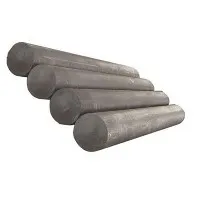
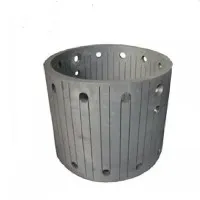
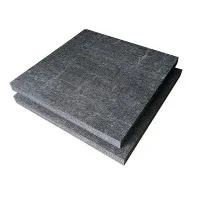
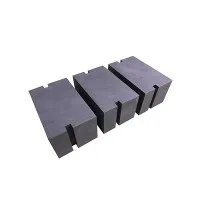
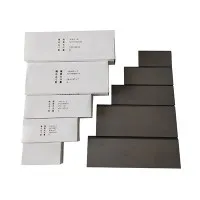
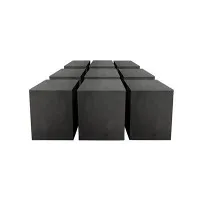
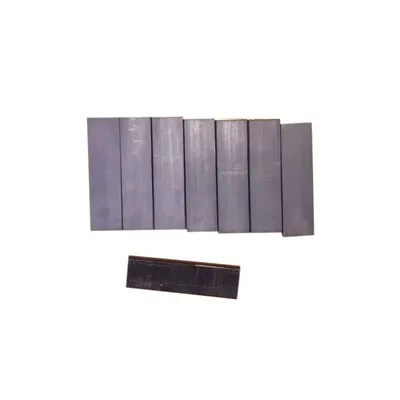
A graphite bipolar plate is a key component of a fuel cell that separates the anode and cathode sides within the cell stack. The bipolar plate is responsible for distributing the reactant gas or liquid and transporting the electrons between cells. Graphite is an ideal material for bipolar plates due to its high electrical conductivity, corrosion resistance, and durability. Graphite bipolar plates can be manufactured in a variety of shapes and sizes to fit various fuel cell designs and can greatly improve the performance and efficiency of the fuel cell.
Features of Graphite Plate
High Conductivity.
It structurally acts as a series connection of single cells.
Impermeability.
It isolates the reacting gas and cooling water in each chamber.
High Thermal Conductivity.
It can quickly transfer the heat generated in the reaction area to the cooling fluid.
High Strength, Low Density, and High Heat Capacity.
It can meet the requirements of structural strength, vibration resistance, power density, and low-temperature start-up of the battery.
Differences between Graphite Bipolar Plate & Metal Bipolar Plate
Tendency for Corrosion
Due to their inherent tendency to react in acidic environments, metal BPPs are extremely prone to corrosion. To prevent this corrosion, and extend their lifetime, they require added and expensive protective coatings. This additional processing step increases the cost of metal plates, and leaves long-term risk of corrosion for applications where 10,000‘s hours of life time are required.
Higher Overall Costs
Beyond the cost of the special protective coating, the materials in the metal plates themselves are inherently more expensive. This is in addition to higher manufacturing processing costs when compared to graphite plates.
Short Lifetimes
Metal plates have been optimized for automotive application with life expectancy of 5,000 hours. Fuel cell vehicles that operate in heavy duty operations, such as buses and trucks, demand BPPs with lifetimes of over 20,000 hours. Metal plates have yet to demonstrate this performance in real world conditions, whereas graphite plates have.
Advantages of Graphite Bipolar Plate

Graphite Bipolar Plates Have Lower Upfront and Long Term Costs
Graphite BPPs are much lower cost than metal plates. They’re a lower cost product now, and they offer a path to lower cost in the future through manufacturing improvements.
Once the stack has reached the end of its lifetime, Ballard can pull the Membrane Electrode Assembly (MEA) out of the stack and retrieve the catalyst.
We can then use the original graphite bipolar plates and hardware to return the stack to service in the field to original product specifications. Metal plates cannot be reused.
This is far less costly than purchasing an entirely new stack. And since bipolar plates today represent 20-30% of the overall stack cost, the savings are significant. Ballard has been successfully reusing graphite BPP’s with millions currently in service.
Graphite Bipolar Plates Have Higher Durability
Fuel cell stacks using graphite bipolar plates have proven their lifetime and durability across a range of applications. Today, metal plates are today limited to automotive applications where a shorter lifetime (5,000 hours) is acceptable. graphite bipolar plates in operation in fuel cell transit buses have reached more than 30,000 hours of operation, issue-free.
Additionally, thousands of Ballard fuel cell stacks using graphite bipolar plates have operated in material handling vehicles beyond 10,000 hours.


Graphite Bipolar Plate Flexible Design Leads to Better Performance
A key design lever that allows designers to create high power density stacks is plate formability. Metal material has limits on formability, and whatever is stamped on one side is mirrored on the opposite side.
By contrast, with graphite BPPs, designers have significantly more design flexibility and more freedom to create truly 3-D designs. These lead to longer life, higher performance, lower weight, and superior freeze start capability of the fuel cell stack.
Graphite Bipolar Plates Allow for High Power Density Stacks
The high volume production of thin, high quality, graphite bipolar plates is well understood and offers key advantages over metal plate production, because the coating and welding processes are not required.

Application of Graphite Bipolar Plate

Automotive Industry:
Graphite bipolar plates are extensively used in fuel cell vehicle applications due to their excellent chemical and thermal stability, high electrical conductivity, and lightweight properties. They are used in proton exchange membrane fuel cells (PEMFCs) and direct methanol fuel cells (DMFCs) to transport hydrogen and oxygen to the fuel cell stack.
Telecommunications Industry:
Graphite bipolar plates are also used in telecommunication backup power systems where they serve as an integral part of the fuel cell system. They help to convert stored hydrogen and oxygen into electrical energy, providing backup power to cell towers and other critical telecommunications infrastructure during power outages.


Industrial Processes:
Graphite bipolar plates are also used in industrial processes where hydrogen and oxygen are produced from water or other sources. They are used to transport hydrogen and oxygen to the fuel cell stack to generate electrical energy, resulting in lower carbon emissions and higher energy efficiency.
Aerospace Applications:
Graphite bipolar plates are also utilized in space applications where weight optimization and longevity are crucial. They are used in proton exchange membrane fuel cells (PEMFCs) as a reliable power source for spacecraft, satellites, and other space missions.

How to Select Graphite Bipolar Plate
1. Meet the Active Area Requirements
The selection of the bipolar plate should first consider meeting the active area requirements of the stack power. The selection of the active area area is closely related to the position of the uniform gas distribution area and uniform temperature distribution area of the stack. Otherwise, the durability of the stack will be affected. At present, the power demand of fuel cells continues to increase, and the active area of membrane electrodes is increasingly required. When increasing the area, it is necessary to consider whether the molding and stamping processes can meet the processing requirements of large-scale positive plates.
2. Consider All Aspects of Tolerance
In addition, the dimensional tolerances, geometrical tolerances and assembly tolerances of the bipolar plate, membrane electrode and sealing line should be fully considered in the selection of the electrode plate. Only reasonable tolerance selection can ensure the reliability, consistency and durability of the product. The following figure shows the mating section of the bipolar plate, the sealing wire and the membrane electrode. The rational selection of the mating area has an important impact on the assembly performance, dry and wet durability, and active area ratio.
3. Material Properties and Molding Process
The bipolar plate selection process should fully consider the material characteristics and forming process. Compared with the metal plate, the strength of the graphite plate is lower and the gas permeability is higher. Therefore, there must be a safety margin in the thickness of the plate. At present, the graphite plate is generally engraved. Keep at least 0.3mm thickness at the thinnest part, and the thickness of the molded plate material will be thinner. As shown in the figure below, there is a thick material spacing between the bottom of the flow channel of the left graphite plate, while the other side of the hydrogen and air cavity is combined into a water channel when the right metal plate is formed, and the plate is only 0.1mm thick , thinner than a single cell with a graphite bipolar plate.
4. Air Distribution Port and Structural Strength Selection
When selectioning the inlet at the gas distribution inlet of the electrode plate, the metal plate has the following two methods: one is to have a gas distribution separator between the cathode and the anode plate, and the structure is relatively complex; the other is to form a Z-shaped gas distribution Although the width of the sealing area will be increased, the overall structure is simple.
The graphite bipolar plate uses a perforated method, and uses the anode plate and the cathode plate to form a gas distribution port, and the structure is relatively simple.
The maximum power of the stack needs to have a matching air distribution port selection and structural strength selection. The area of the air distribution port will affect the upper limit of the number of batteries assembled. The plate structure selection affects the strength of the stack in all directions after assembly. In addition, the gas flow direction, the stack Factors such as placement direction, process process hole position, inspection and power supply, and power supply board power supply must be considered in the selection stage. Metal bipolar plates from different manufacturers have three-way media inlet and outlet on the same side, as well as different selections for other needs.
5. The Flow Field Medium is Evenly Distributed
In terms of flow field selection, the selection of air path, hydrogen path and water path should ensure uniform distribution of medium, and reasonable pressure drop selection should ensure uniform distribution among different single cells, especially on the hydrogen and air sides to reduce the influence of liquid water , in the selection of the runner, the matched engine system and the corresponding working conditions should also be considered, and the selection of each manufacturer is different.
How to Maintain Graphite Bipolar Plate
Sandblasting:
Abrasive particles are sprayed onto the surface of the bipolar plate under pressure to remove roughness and unevenness.
Chemical Treatment:
Chemical solutions are used to clean and smooth the surface of the bipolar plate.
Electropolishing:
An electrical current is passed through the bipolar plate to smooth and polish the surface.
Plasma Etching:
A plasma beam is directed onto the surface of the bipolar plate to remove roughness and unevenness.
Mechanical Processing:
Such as grinding, polishing, and milling to improve surface quality.
Laser Treatment:
A laser beam is directed onto the surface of the bipolar plate to remove roughness and unevenness and improve surface quality.
Sandblasting:
Abrasive particles are sprayed onto the surface of the bipolar plate under pressure to remove roughness and unevenness.
Working principle of Graphite Bipolar Plate
The bipolar plate transports hydrogen and oxygen to the reaction zone of the cathode and anode, respectively, while isolating the reaction gases in each chamber. In the reaction zone, the hydrogen on the cathode is decomposed into protons (positively charged hydrogen ions) and electrons (negatively charged) through a catalyst. The protons reach the cathode through a polymer electrolyte membrane (PEM), while the electrons flow to the anode through an external circuit. At the anode, oxygen combines with protons and electrons through a catalyst to form water, while releasing electrical energy.
Our Factory
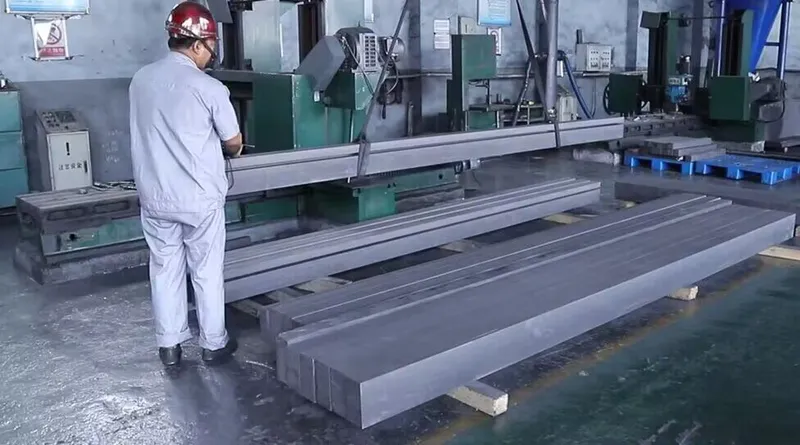
We have a complete factory production, quality supervision and delivery.

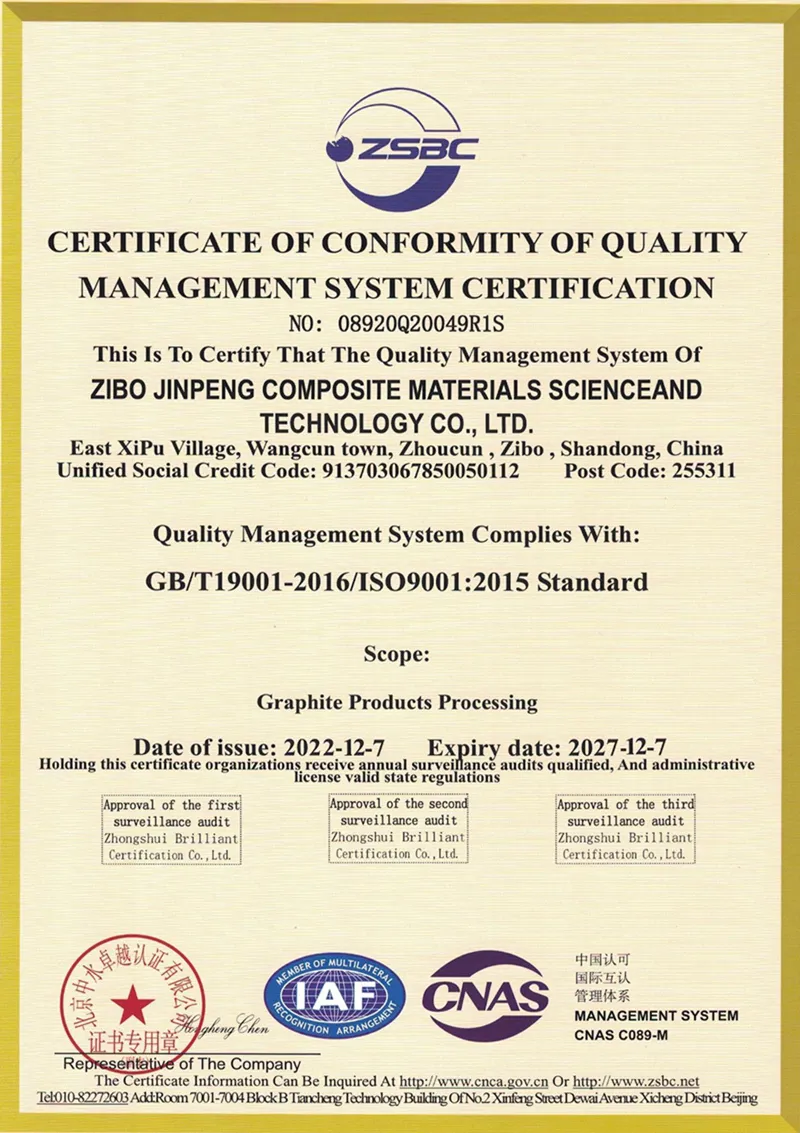
Our Certificate
At present, we have obtained the following certificates.
Ultimate FAQ Guide to Graphite Bipolar Plate
Q: 1. What is a graphite bipolar plate made of?
Q: 2. How does a graphite bipolar plate work in a fuel cell?
Q: 3. What are the advantages of using graphite bipolar plates in fuel cells?
Q: 4. What are the different types of graphite bipolar plates?
Q: 5. What is the production process for graphite bipolar plates?
Q: 6. How do you choose the right graphite bipolar plate for your fuel cell application?
Q: 7. What are the typical sizes and shapes of graphite bipolar plates?
Q: 8. Can graphite bipolar plates be customized to fit specific fuel cell designs?
Q: 9. What is the maximum operating temperature for graphite bipolar plates?
Q: 10. How long do graphite bipolar plates typically last in a fuel cell?
Q: 11. What is the thickness of a typical graphite bipolar plate?
Q: 12. What is the electrical conductivity of graphite bipolar plates?
Q: 13. What is the thermal conductivity of graphite bipolar plates?
Q: 14. Are there any disadvantages to using graphite bipolar plates in fuel cells?
Q: 15. How are graphite bipolar plates used in a fuel cell stack?
Q: 16. What is the role of the coating on graphite bipolar plates?
Q: 17. What are the different types of coatings used on graphite bipolar plates?
Q: 18. What is the purpose of the channels and flow fields on a graphite bipolar plate?
Q: 19. How are the channels and flow fields designed on graphite bipolar plates?
Q: 20. How do you maintain and care for graphite bipolar plates in a fuel cell application?