

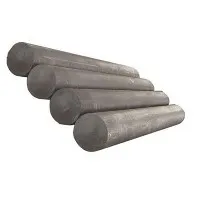
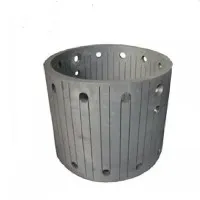


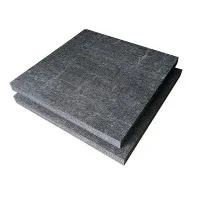


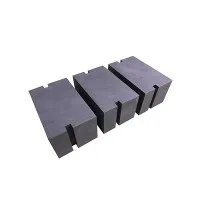


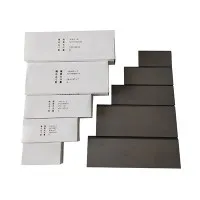
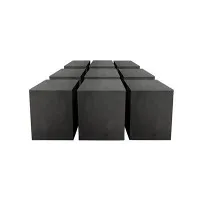


Die Mold Casting Graphite Mold
Die casting mold Casting graphite mold is a casting processing tool used in industry to produce high quality and special size metal parts. Made of high-purity graphite material with excellent thermal conductivity, high strength and durability. Very suitable for use in mass production of metal parts.
Advantage
Die-cast graphite molds work through the injection molding process, which introduces liquid metal material into the mold forming cavity and allows it to cool and harden. These molds are designed with complex molding cavities to produce complex parts that are difficult to produce with other manufacturing methods. They are used in parts manufacturing for industries such as automotive, aerospace and medical equipment.
One of the main advantages of die-cast graphite molds is their ability to withstand high temperatures, which makes them ideal for casting high-melting point metals such as steel and aluminum as well as copper. They also offer excellent erosion and abrasion resistance, ensuring they can be used repeatedly without loss of quality or accuracy.
Die-cast graphite molds are essential for manufacturers looking to produce complex metal parts with high quality and efficiency. Their durability, precision and versatility make them key to modern industrial production methods.
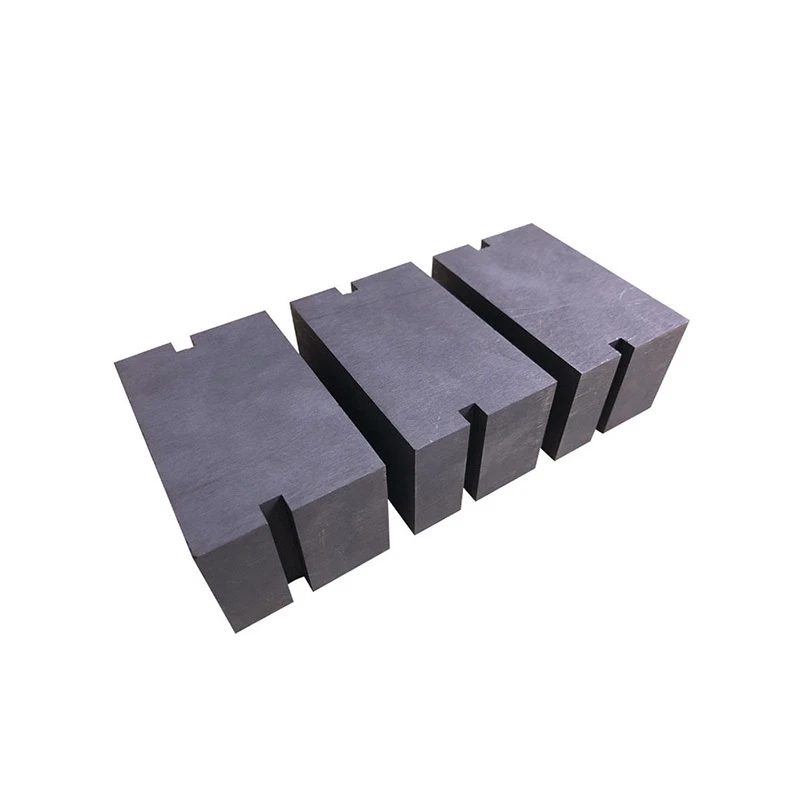
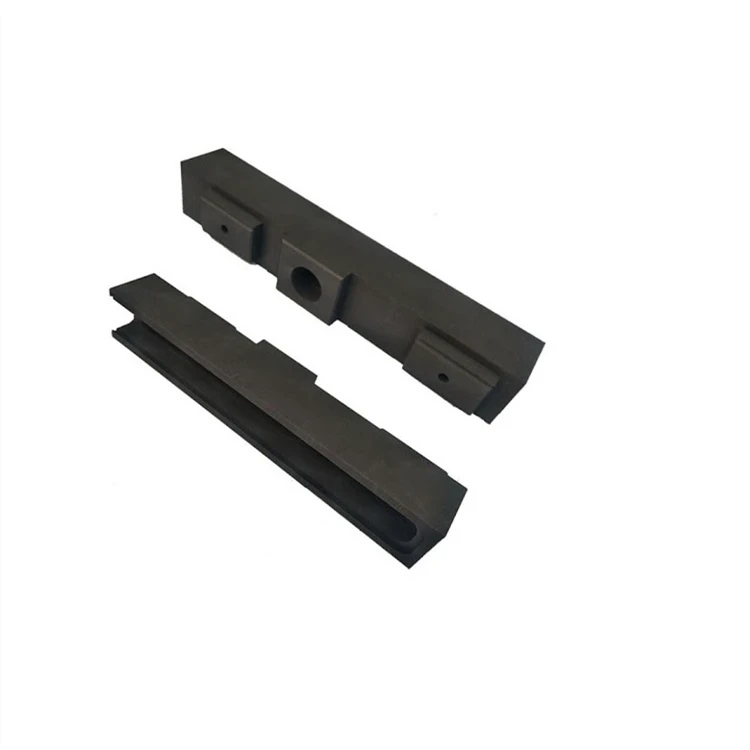
Application of molds
Molds are extremely widely used basic equipment in industrial production, and the mold industry is the basic industry of the national economy. In modern industrial production, product parts widely use stamping, forging, die-casting, extrusion, injection molding or other forming processing methods to cooperate with the forming mold to shape the blank and process it into parts that meet product requirements. . Various tools and products we use in our daily production and life, ranging from the base of machine tools and body shells to screws, buttons and the shells of various household appliances, are closely related to molds. The shape of the continuous casting graphite mold determines the shape of these products, and the processing quality and precision of the mold also determines the quality of these products.
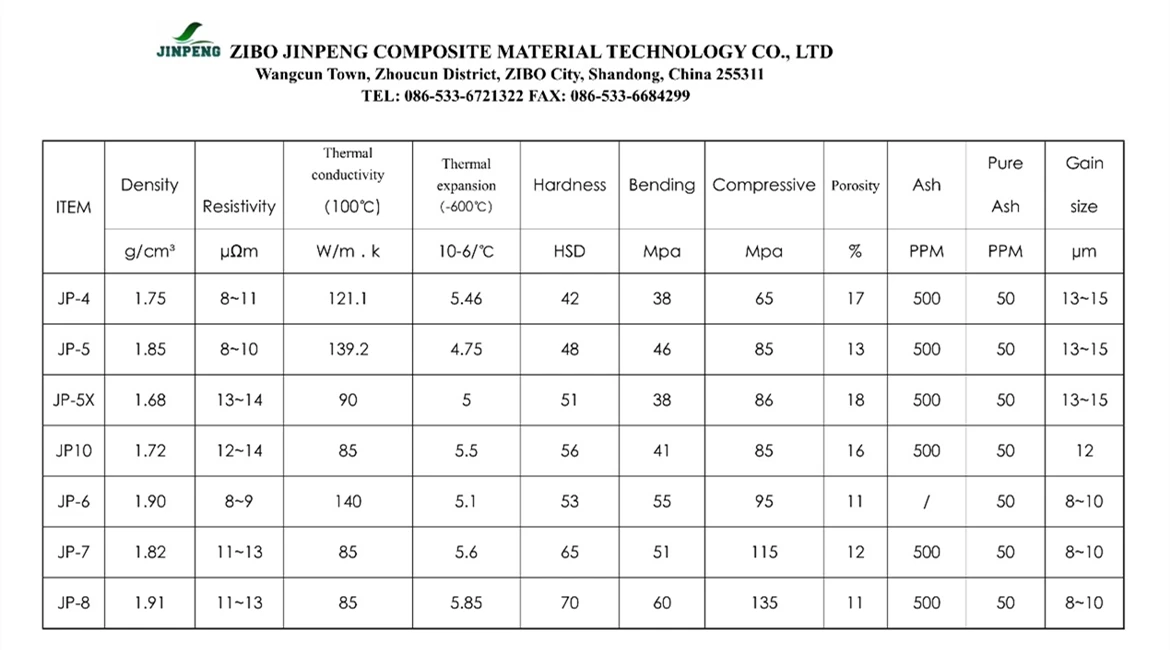
Excellent performance of continuous casting graphite molds: excellent thermal conductivity and electrical conductivity; good thermal stability and heat impact resistance such as low wire expansion coefficient; resistance to chemical corrosion and most metals are not easy to react; at high temperature (more than 800°C sintering temperature of most copper matrix tires) strength increases with temperature; good lubrication and wear resistance; easy to process, good machining performance, can be made into molds with complex shape and high accuracy.
Application of Jinpeng graphite molds: graphite molds for continuous casting and semi-continuous casting of non-ferrous metals: In recent years, advanced production methods such as direct continuous (or semi-continuous) manufacturing of bars or pipes from molten metals are being promoted at home and abroad. This method has been adopted in copper, copper alloy, aluminum, aluminum alloy and other aspects in China. Artificial graphite is considered a suitable material for continuous casting or semi-continuous casting molds of non-ferrous metals. Production practice has proved that due to the use of graphite molds, because of its good thermal conductivity (heat conductivity determines the solidification speed of metals or alloys), good self-lubricating performance of the mold and other factors not only improve the casting speed, but also because the size of the ingot is accurate, the surface is smooth and the crystalline structure is uniform, the next process can be directly processed. This not only greatly improves the yield of the finished product and reduces the loss of waste, but also greatly improves the quality of products. There are two methods of continuous casting: vertical continuous casting and horizontal continuous casting.
Die-casting mold: Artificial graphite material has been successfully used in non-ferrous metal die-casting. For example, zinc alloy and copper alloy castings produced from die-casting molds made of artificial graphite materials have been used in automotive parts.
Graphite molds for centrifugal casting: Graphite molds have been successfully used in centrifugal casting. Some manufacturers have used artificial graphite molds with a wall thickness of more than 25 mm to centrifugally cast bronze casings. In order to prevent artificial graphite molds from burning, certain anti-oxidation measures can be taken. After casting a certain number of castings, if it is found that the inner surface of the mold is burned, the size of the inner hole of the mold can be enlarged for casting other large-sized casings.
Hot pressing mold: Carbide pressure sintered artificial graphite hot pressing mold has the following characteristics: 1. If the pressing temperature rises to 1350-1450 degrees, the required unit pressure can be reduced to 67-100kgf/cm2 (i.e. 1/10) cold pressing pressure); secondly, pressing and heating are performed in the same process, and a dense sintered body can be obtained in a short period of sintering.
This mold is suitable for glass molding: due to the chemical stability of the graphite material, it is not easy to penetrate into the molten glass and does not change the composition of the glass. Graphite material has good thermal shock resistance and small size changes with temperature. Therefore, it has become an indispensable mold material in glass manufacturing. .
Sintering mold and other diamond sintering molds: Using the characteristics of minimal thermal deformation of artificial graphite materials, sintering molds and brackets that can be made of transistors have been widely used. It has become an indispensable material for the development of the semiconductor industry. In addition, graphite molds are also used in casting iron, durability molds for various non-ferrous metals, castings for casting steel, castings for heat-resistant metals (titanium, zirconium, molybdenum, etc.) and aluminum hot welding molds for welding rails. The graphite mold used for hot pressing sintered diamond tools plays the dual role of heating elements and mold support in the manufacturing process of diamond tools. The quality of graphite molds directly affects the dimensional accuracy and appearance shape of diamond tools.
Requirements for hot pressing sintering process: the temperature reaches (1000±2) °C, the molding pressure is 16-50MPa, the insulation time is 15-30min, and the environment is in a non-vacuum state. Under such working conditions, the graphite mold with molding and heating elements is not only required to have conductivity, high resistivity and sufficient mechanical strength, but also have good antioxidant performance and long service life to ensure the dimensional accuracy and excellent performance of diamond tools. At present, graphite mold materials for diamond tool manufacturing in Western developed countries are mainly ultra-fine particle structure, high purity and high graphitization. The average particle size is required to be less than 15μm, or even less than 10μm, and the medium pore size is less than 2μm. The graphite mold made of this carbon raw material has a small porosity, dense structure, high surface finish, strong antioxidant resistance, and an average service life of up to 30-40 times. Diamond molds require high material hardness, good antioxidant performance and high processing accuracy. The use of graphite raw materials greatly prolongs the service life of the mold and improves antioxidant performance.
RFQ
Q: Are you trading company or manufacturer ?
Q: Is the graphite material of the heating element are self-produced?
Q: Can you provide customized services and installation guidance?
Q: Can you provide MTC or COC ?
Hot Tags: die mold casting graphite mold, China die mold casting graphite mold manufacturers, suppliers, factory, graphite heating for inert atmosphere furnaces, graphite high precision machining mould, graphite heating rods, laboratory graphite heating elements, graphite rotors for vacuum pump service, graphite efficient mould
Previous
No InformationYou Might Also Like


Send Inquiry