

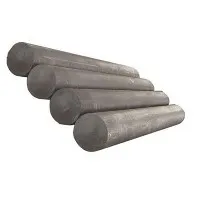
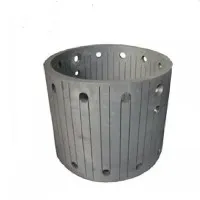


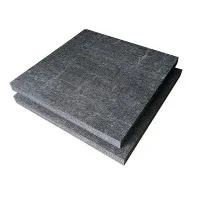


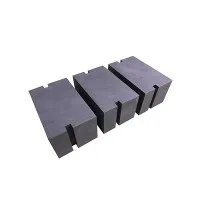


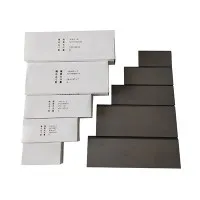
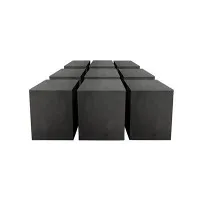


Graphite Plate
Why Choose Zibo Jinpeng Composite Materials Technology Co., Ltd.?

Zibo Jinpeng Composite Materials Technology Co., Ltd. is located in Wangcun Town, Zibo City, Shandong Province, which is a famous graphite carbon industry base in China. Our company mainly produces and processes graphite carbon materials. It has a complete production process and marketing system. It has been engaged in the production and processing of graphite products for more than 20 years. It has built its own production and processing process system and has three national invention patents. It has established extensive technical cooperation relationships with well-known domestic university laboratories such as Shandong University of Technology and Northwestern Polytechnical University and has produced graphite parts for many well-known companies. It has its own related industrial R&D system and testing and testing equipment.
Professional Technical Team
We have more than 20 years of experience and dozens of senior engineers in the graphite R&D, production and manufacturing industry. Whether it is the research and development of graphite raw materials, the precise processing of graphite parts, and the graphitization and purification of related products, our high-level technical team can customize professional solutions for you.
Wide Range of Applications
Our product application range includes the glass industry, high temperature furnace industry, refractory industry, plastics industry, semiconductor electronics industry, photovoltaic industry, pharmaceutical and chemical industry, aerospace industry, metallurgical industry, automotive industry, renewable energy industry, textile machinery manufacturing, glass machinery manufacturing.
Professional Service
Fully communicate with customers before sales, provide professional product suggestions and technical support according to customer needs, and ensure the high quality of products in manufacturing, packaging, logistics and other aspects. During the sale period, Zibo Jinpeng Graphite Factory not only provides on-time delivery services but also provides comprehensive after-sales technical support such as lifetime warranty, technical consultation and problem diagnosis to ensure customer satisfaction and trust. In terms of after-sales service, we attach great importance to customer feedback, promptly solve problems and concerns raised by customers, and continuously improve service quality and efficiency based on customer experience and suggestions.
Wide Product Range
Our main products are Graphite heating elements, Graphite felt & carbon felt & rigid felt, Graphite crucible, etc. At present, North America, Eastern Europe and Southeast Asia are Zibo Jinpeng's main international cooperation destination markets. Thanks to stable product quality and excellent material properties, the graphite products produced by Zibo Jinpeng have a high market share in the fields of smelting, chemical industry, and high-temperature industrial furnace accessories.


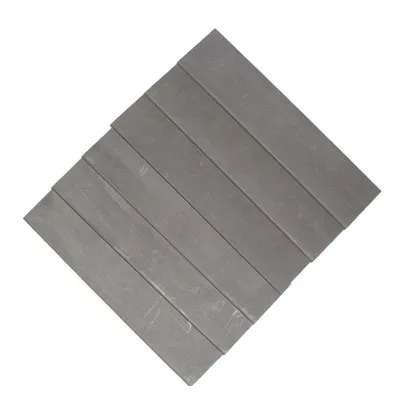

What is Graphite Plate?
Graphite plates are attached to the electrode backings of a fuel cell stack on either side. These plates serve a double purpose within the fuel cell stack. One purpose of the graphite plate is to act as a conductor by receiving the energy from the electrodes. The other purpose is to guide the flow of the hydrogen and oxygen through their respective ends of the stack, making sure that the maximum amount of the gasses and moisture comes in contact with the membrane.
To prevent gasses from leaking out through the normally porous graphite, the plates are constructed using a much longer and more complex process that creates nonporous plates.
Features of Graphite Plate
The ease of processing of graphite plates: Graphite plates can be die-cut into different sizes, shapes and thicknesses, and die-cut flat plates can be provided, with thicknesses ranging from 0.05 to 1.5m.
The high temperature resistance of the graphite plate: The high temperature of graphite plate can reach 400℃, and the lower temperature can be lower than -40℃.
High thermal conductivity of graphite board: The in-plane thermal conductivity of graphite board can reach 1500W/mK. The thermal resistance is 40% lower than aluminum and 20% lower than copper.
The flexibility of graphite board: Graphite board can be easily made into a laminate with metal, insulating layer or double-sided tape, which increases design flexibility and can have an adhesive on the back.
Lightness and thinness of graphite plate: Graphite plate is 30% lighter than aluminum of the same size and 80% lighter than copper.
The ease of use of graphite plates: graphite heat sinks can be smoothly attached to any flat and curved surfaces.
Types Of Graphite Plate
Graphite Baffle Plate
It has high-temperature resistance, high density, stable chemical properties, strong acid-alkali corrosion resistance, excellent conductivity and heat conductivity, long service life, and is widely used in the chemical industry, machinery, and other fields.
Graphite Anode Plate
Anode graphite plate has good heat resistance, good conductivity, and heat conduction is easy to machine, good chemical stability, acid-alkali corrosion resistance, and low ash content, and is widely used in the preparation of chlorine in electrolyzed water solution.
Graphite Mill Liner Plate
Graphite liner plate has the characteristics of excellent chemical corrosion resistance, heat conductivity, thermal stability, small proportion, high mechanical strength, nonpolluting medium, and good wear resistance.
High Purity Graphite Plate
It is produced by a strict high-purity graphite process. High purity graphite has good electrical conductivity, high-temperature resistance, acid resistance, alkali corrosion resistance, and easy processing.
Isostatic Pressing Graphite Plate
It has good heat resistance, and its mechanical strength will increase with the increase of temperature in an inert atmosphere, and reach the highest value at 2500 ℃.
Advantages of Graphite Plate
Lightweight:
Carbon graphite plates offer a remarkable strength-to-weight ratio, making them significantly lighter than traditional metal alternatives. This characteristic improves fuel efficiency, reduces transportation costs, and enhances overall productivity.
01
High Strength:
These plates possess exceptional mechanical strength, allowing them to withstand heavy loads and resist deformation, ensuring prolonged product lifespan.
02
Thermal Stability:
Carbon graphite plates exhibit exceptional resistance to extreme temperatures, making them viable candidates for applications subjected to thermal cycling or in contact with high-temperature fluids.
03
Electrical Conductivity:
The superior electrical conductivity of carbon graphite plates enables efficient energy transfer, reducing power losses and enhancing overall system performance.
04
Chemical Resistance
Carbon graphite plates are highly resistant to corrosive chemicals and environmental factors that can degrade conventional materials. This property ensures their longevity and reduces maintenance costs.
05
Application of Graphite Plate

Graphite plate is widely used in metallurgy, chemical industry, electrochemistry, and other industries because of its good conductivity, high-temperature resistance, acid resistance, alkali corrosion resistance, and easy processing. The biggest use of graphite sheets plates is in the semiconductor field, but it is also widely used in solar cells, sensors, Nano Electronics, high-performance nanoelectronic devices, composite materials, field emission materials, and other fields.
Automotive Industry:
With the constant need to reduce vehicle weight and enhance fuel efficiency, carbon graphite plates are increasingly used in manufacturing lightweight components like chassis, body panels, and battery enclosures. The impressive strength and heat resistance of these plates ensure improved safety, sustainability, and overall performance in the automotive sector.


Aerospace Industry:
The aerospace industry demands materials that can withstand extreme conditions while providing reliability and efficiency. Carbon graphite plates are ideally suited for applications such as aircraft wings, fuselage structures, and rocket nozzle components. Their lightweight nature significantly reduces aircraft weight, leading to increased fuel efficiency and enhanced maneuverability.
Electrical Engineering:
Carbon graphite plates are excellent electrical conductors, making them ideal for manufacturing components such as current collectors, brushes, and commutators in electric motors and generators. These plates offer low resistance, optimal thermal conductivity, and outstanding resistance to wear, making them the preferred choice in electrical engineering applications.


Manufacturing and Machinery:
In the manufacturing and machinery sector, carbon graphite plates are utilized in fabricating heat shields, furnace parts, and other components that require resistance to extreme temperatures and harsh chemical environments. The plates' superior thermal stability and resistance to corrosion increase equipment longevity and improve operational efficiency.
Renewable Energy Sector:
Carbon graphite plates are instrumental in the renewable energy sector, contributing to the efficient generation and storage of clean energy. They are employed in the production of wind turbine blades, solar panel frames, and battery technologies, aiding in the transition towards a sustainable future.

How to Select Graphite Plate
There are many kinds of graphite plates with different properties, which can be used in the fields of electrochemistry, metallurgy, chemical industry, etc.
Mechanical: The graphite anode plate for machinery needs to use the raw material with good friction resistance and lubrication, and it is the kind of graphite with relatively large density and small particles.
Electrical Conductivity: The carbon graphite plate with good conductivity generally selects the relatively large particle, because the large graphite particle has the advantages of high current resistance and is not easy to break. Graphite anode plate manufacturers choose raw materials with a good graphitization degree for processing, because this type of graphite has a soft texture and good conductivity.
How to Maintain Graphite Plate

Crack Repair:
For minor cracks, repair can be done by applying adhesive to the crack. If the crack is more serious, it is necessary to replace the damaged part or the whole piece.

Deformation Correction:
For graphite plates with light deformation, it can be corrected by mechanical pressure. If the deformation is severe, it may be necessary to replace the graphite sheet as a whole.

Ablation Treatment:
In high temperature environment, the ablation of graphite plate is inevitable. In order to extend the service life of the graphite plate, the surface of the graphite plate can be coated with high temperature resistant coating to reduce the degree of ablation.

Troubleshooting of the Control System:
If the control system is faulty, check the hardware and software of the control system to ensure that the parameters are correctly set and the system runs stably. The control system can be inspected and maintained by regular maintenance and testing.
How to Use Graphite Plate Safely

Strictly Abide By the Operating Procedures:
Before using graphite plates, be sure to read the operating procedures in detail and operate in accordance with the procedures. Avoid device damage due to misoperation.

Keep the Equipment Clean:
Regularly clean the dust and dirt on the surface of the graphite plate to maintain good heat conductivity. At the same time, keep the inside of the device clean to prevent the accumulation of impurities and equipment faults.

Reasonable Arrangement of Load:
Avoid overload of the use of graphite plates to prevent equipment overheating and damage. Arrange the load reasonably according to the actual needs to ensure that the device runs within the safe range.

Regular Inspection and Maintenance:
Regular inspection and maintenance of the graphite plate and its control system to discover and solve potential faults in time. At the same time, according to the use of equipment, reasonable arrangement of maintenance and maintenance plan.

Training Qualified Operators:
Operators using graphite plates need to undergo professional training to understand the structure, working principle and operation method of the equipment. Only persons with qualified operating skills and knowledge should use graphite plates.
Our Factory
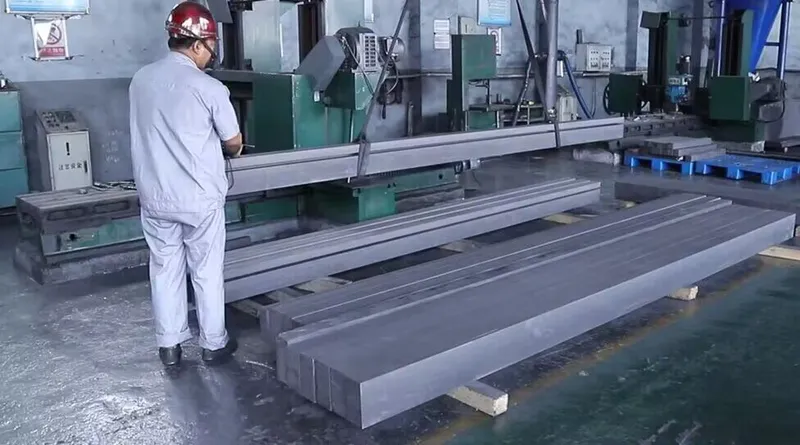
We have a complete factory production, quality supervision and delivery.

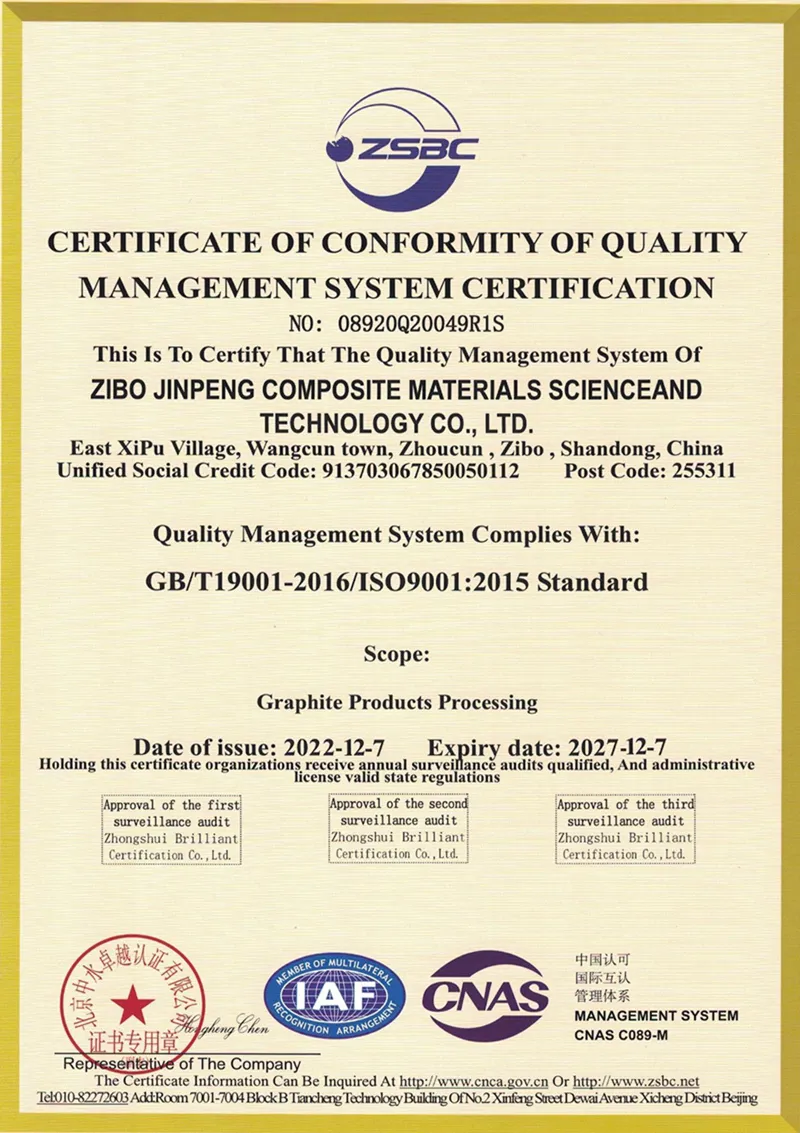
Our Certificate
At present, we have obtained the following certificates.
Ultimate FAQ Guide to Graphite Plate
Q: 1. What is a graphite plate?
Q: 2. What are some common uses for graphite plates?
Q: 3. What are the advantages of using graphite plates?
Q: 4. Are graphite plates strong?
Q: 5. How do you clean graphite plates?
Q: 6. What is the difference between graphite plates and graphite sheets?
Q: 7. How are graphite plates made?
Q: 8. What are some common types of graphite used in graphite plates?
Q: 9. Can graphite plates be machined?
Q: 10. What is the maximum temperature that graphite plates can withstand?
Q: 11. Are graphite plates conductive?
Q: 12. What is the density of graphite plates?
Q: 13. What is the thermal conductivity of graphite plates?
Q: 14. What is the electrical conductivity of graphite plates?
Q: 15. Can graphite plates be used in vacuum environments?
Q: 16. Are graphite plates chemically inert?
Q: 17. What is the coefficient of thermal expansion of graphite plates?
Q: 18. What is the tensile strength of graphite plates?
Q: 19. Can graphite plates be used in high-pressure applications?
Q: 20. Are graphite plates resistant to radiation?
Q: 21. What are some common methods for joining graphite plates together?
Q: 22. Can graphite plates be recycled?
Q: 23. What is the cost of graphite plates?
Q: 24. Can graphite plates be customized?
Q: 25. What are the potential risks associated with using graphite plates?