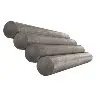
Graphite heating elements for industrial furnaces
high-purity equipment for graphite elements, and anti-oxidation coating technology have pushed the limits of industrial furnaces (temperatures can reach over 3000°C), promoted the development of high-precision processes such as semiconductor single crystal silicon growth and carbon fiber production, and automated control technology on equipment. Graphite heating elements are integrated into intelligent industrial furnaces, which improves energy efficiency and reduces energy consumption by more than 20% through precise temperature control. Environmentally friendly and sustainable development has helped European companies reduce energy consumption in industrial furnaces with high efficiency. For example, it replaces traditional resistance heating in the steel industry and reduces carbon emissions by 15%-30%, which fully complies with the requirements of the EU Green New Deal. It develops graphite recycling technology to reduce dependence on natural graphite, and explores alternative materials such as silicon carbide to cope with the scarcity of graphite resources.

Graphite heating elements for industrial furnaces are used in accelerated heat treatment (RTP) furnaces in chip production.
In the sintering of lithium point negative electrode materials, graphite heating furnaces have become mainstream equipment. Graphite elements are used to manufacture heat treatment furnaces for Kumon alloy turbine blades to improve the performance of aircraft engines. In the international market, China is the main supplier of natural graphite in the world, accounting for more than 60%.
In the future, the oxidation problem of graphite heating elements for industrial furnaces under long-term high temperatures still needs to be continuously broken through, extending the service life, accelerating the development of industrialization in Southeast Asia, and promoting the demand of traditional industries. In semiconductor wafer manufacturing, graphite heating elements are used in CZ method single crystal silicon growth furnaces to provide a stable high temperature environment (1400-1600℃) to ensure high purity and low defect rate of silicon crystals. Graphite heaters are used in polysilicon ingot furnaces to produce solar-grade polysilicon ingots through directional solidification technology to support photovoltaic cell manufacturing. High-temperature resistant ceramic matrix composite (CMC) sintering furnaces for rocket engine nozzles, such as the production of X-43A hypersonic aircraft components for NASA in the United States. In the thermal barrier coating (TBC) deposition process of turbine blades, graphite elements provide a uniform high-temperature environment (such as the application case of Safran in France). Graphite furnaces are used to synthesize advanced materials such as high-purity graphene and silicon carbide powder, such as the chemical vapor deposition (CVD) equipment of SGL Carbon in Germany. In the high-temperature corrosion resistance experiment of nuclear fuel rod cladding materials (such as zirconium alloy), graphite heating furnaces simulate extreme working conditions. It is used in sintering furnaces for advanced ceramics (such as alumina and silicon nitride), tin bath heating systems in float glass production, sintering and hot isostatic pressing (HIP) treatment of metal powders (such as tungsten and molybdenum) to improve the density and strength of parts.
Graphite heating elements for industrial furnaces have not only promoted the development of the industry abroad,
but also accelerated global industry competition. In the future, with the goal of carbon neutrality promoting the smooth development of the industry, the efficiency and environmental protection of graphite elements will become an international focus, and it is also a good alternative to new materials and new technologies.