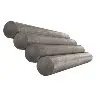
Q1: Are there any classifications of graphite crucibles?
A1: Shape classification: According to their appearance, graphite crucibles can be divided into different types, such as round bottom, square bottom, shallow bottom, deep bottom, etc.
Size classification: Graphite crucibles can be classified according to their size, usually with different capacities and diameters to suit different experimental needs.
Application classification: Graphite crucibles can also be classified according to the specific applications they are used in. For example, some are designed for high-temperature melting experiments, some are used for sample combustion analysis, and some are used for evaporation or thermochemical reactions.
Surface treatment classification: Some graphite crucibles undergo special surface treatments, such as coatings or lacquers, to improve their specific properties, such as corrosion resistance or to reduce reactivity with samples.
Q2: What are the uses of graphite crucible in different fields?
A2: Melting experiments: Graphite crucibles are often used in melting experiments to melt solid samples, mixtures or compounds for analysis, crystallization, synthesis or other processing.
Thermal analysis: In thermal analysis techniques such as thermogravimetric analysis (TGA) and differential scanning calorimetry (DSC), graphite crucibles can be used as sample containers to carry samples and withstand analysis under high temperature conditions.
Metal smelting: In the metal smelting process, graphite crucible can be used to smelt metals, alloys or other materials, such as iron, copper, aluminum, etc.
Catalyst research: Graphite crucible can be used for the preparation and evaluation of catalysts, and the activity, stability and selectivity of the catalyst can be studied through reactions at high temperatures.
Ceramic industry: In the ceramic industry, graphite crucibles can be used for the preparation and sintering of ceramic materials, such as the sintering of ceramic powder and the sintering process of ceramic products.
Chemical synthesis: Graphite crucible can be used for sample heating, evaporation, combustion and other steps in organic synthesis and inorganic synthesis reactions.
Materials research: In the field of materials science and engineering, graphite crucibles can be used for the preparation, processing and testing of various materials, such as the research of carbon materials such as graphene and carbon nanotubes.
Geology: In geological research, graphite crucibles can be used to melt rock samples for analysis, as well as for thermochemical reaction experiments on ores.
Apr 29, 2024
Leave a message
Classification And Uses Of Graphite Crucible
Send Inquiry