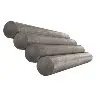
Q1: What is graphite crucible?
A1: Graphite crucible is a type of laboratory equipment used for heating or processing chemical substances at high temperatures. It is made of high-purity graphite. Because graphite has good high-temperature resistance and chemical stability, it can withstand extremely high temperatures, and experiments can usually be performed at temperatures of thousands of degrees Celsius. Commonly used in melting, combustion, evaporation and other thermochemical reactions at high temperatures. Graphite crucibles are widely used in many fields of chemistry, materials science and metallurgy.
Q2: What are the characteristics and functions of graphite crucible?
A2: High temperature resistance: Graphite crucible can withstand extremely high temperatures and can usually conduct experiments at temperatures of thousands of degrees Celsius, which makes it suitable for various chemical reactions and melting experiments at high temperatures.
Chemical stability: Graphite crucible has good chemical stability and is not easy to react with a variety of chemical substances, so it can be used to handle various chemical substances, including strong acids, strong alkali and corrosive substances.
Thermal conductivity: Graphite has excellent thermal conductivity and can conduct heat quickly and evenly, making the sample heated more evenly, which contributes to the stability and accuracy of the experiment.
Mechanical strength: Graphite crucibles usually have high mechanical strength and can withstand the mechanical stress during heating and cooling, and are not easy to break or deform.
Low adsorption: Graphite crucible has low adsorption and is not easy to adsorb samples or cause interference, which contributes to the accuracy of experimental results.
Reusable: Due to their durability and chemical stability, graphite crucibles can often be used over and over again, saving costs and reducing waste.
Apr 25, 2024
Leave a message
What Is Graphite Crucible?
Send Inquiry