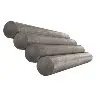
Graphite crucible is a container made of graphite material, which is used to melt metals, ores and other materials under high temperature conditions.
1.Structural characteristics of graphite crucible
Graphite crystal structure: Graphite crucible is a hexagonal crystal structure, which has excellent thermal conductivity and electrical conductivity. It can effectively diffuse heat at extreme temperatures, reduce local stress concentration, and improve its thermal shock resistance.
High temperature resistance: It can withstand high temperatures up to 3000℃ and is suitable for smelting metals at high temperatures. Compared with crucibles made of ceramics, graphite crucibles are more suitable for industrial environments that require stable high temperatures.
Excellent corrosion resistance: Graphite itself has stable chemical properties and is not easily affected by acids, alkalis or other corrosive substances, so graphite crucibles can also maintain a long service life when used in acidic or alkaline environments.

2. Performance advantages of graphite crucible
High-efficiency heat conduction: high-temperature graphite crucible has good thermal conductivity, can quickly transfer heat to the material, improve heating efficiency and reduce energy consumption.
Anti-oxidation treatment: The crucible has been treated with surface anti-oxidation treatment to improve its oxidation resistance and extend the service life of the crucible.
Corrosion resistance and wear resistance: high-temperature graphite crucibles can maintain good performance even in long-term high temperature or corrosive environments.
3.Application fields
Metallurgical industry: It can be used in the smelting of non-ferrous metals such as copper, aluminum, gold, and silver to ensure the efficiency of the smelting process and the quality of the finished product.
Chemical industry: It can also be used for the synthesis of special materials, high-temperature chemical reactions, etc.
Laboratory research: Silicon carbide crucible is an important tool for laboratory high-temperature material testing. It is suitable for the smelting and decomposition of high-temperature metal samples, and meets the equipment requirements for high temperature resistance and stability in experimental research.
4.Selection and maintenance of graphite crucible
Selection notes: Choose a suitable graphite crucible according to different melting temperatures and working environments. Crucibles of different purities, sizes and oxidation resistance levels can be selected.
Preheating before use: When the product is used for the first time, slowly preheat it to avoid cracks caused by sudden temperature rise.
Correct storage: Clean it in time after use and store it in a dry place to prevent the crucible from getting damp and affecting its service life.
Avoid long-term contact with highly corrosive substances: Although the crucible has a certain degree of corrosion resistance, try to avoid contact with corrosive substances such as strong acids and alkalis to extend the life of the crucible.